What Actually Happens When We Tear Down a Deck: The Dalesford Job
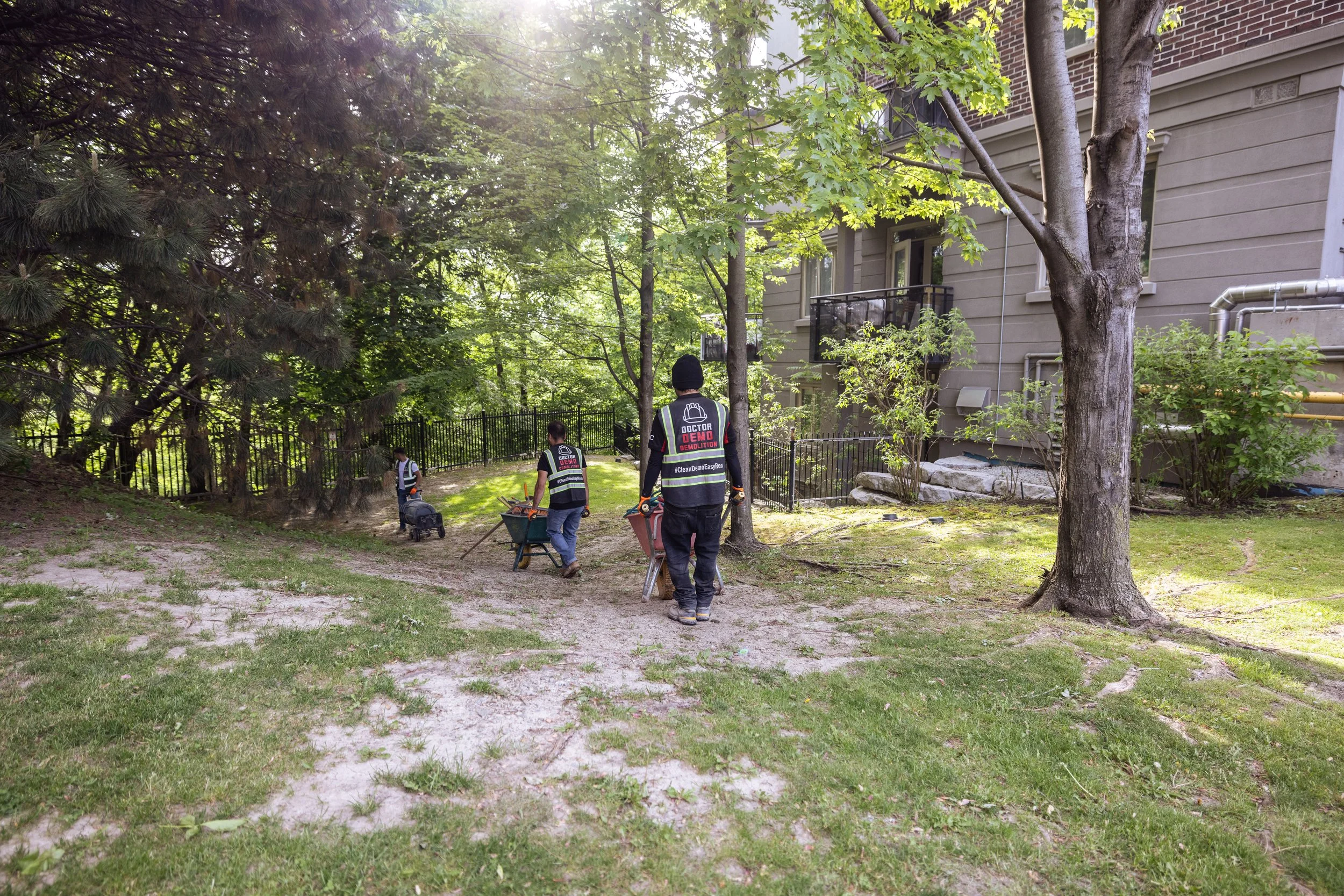
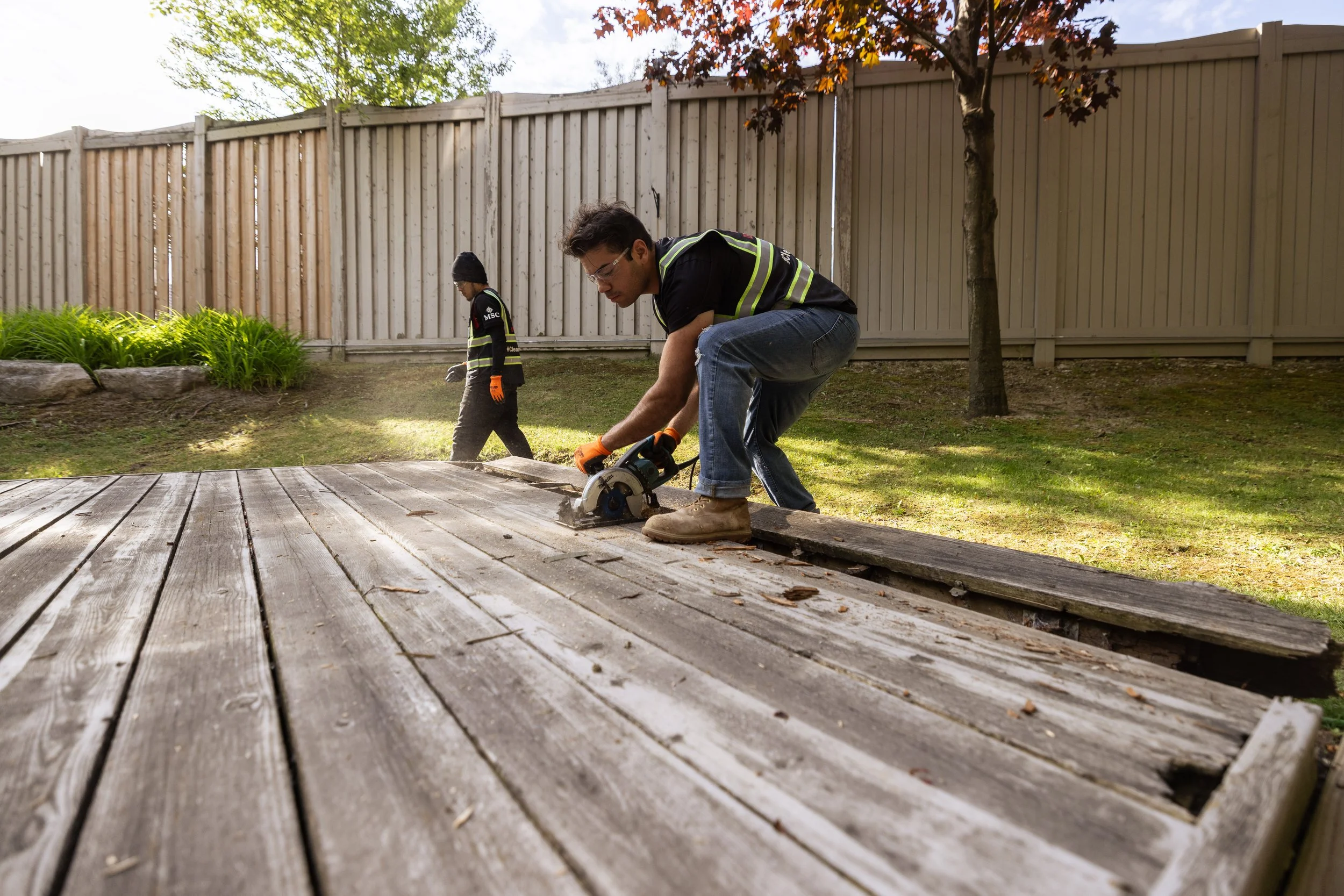
Most homeowners think about deck demolition the same way they think about pulling weeds: grab a tool, start ripping, haul it to the curb. A recent exterior demolition we completed on Dalesford Avenue in Etobicoke is a good example of why that assumption gets people in trouble, and what a deck teardown actually looks like when it is done by a crew that does this for a living.
The Dalesford Job
This project came to us ahead of a backyard rebuild. The existing deck had done its job for years, but it was tired, undersized for what the homeowner wanted next, and attached directly to the house in a way that meant any careless demolition risked damaging siding, a door frame, or worse. The homeowner did not want a demo crew that would show up, start swinging, and leave problems for the framing crew to discover later. That is exactly the standard we hold ourselves to on every exterior job.
Why Exterior Demolition Is Not a DIY Weekend Project
A deck looks like a simple wood structure from the top, but underneath it is a mix of structural connections, buried utility runs, and sometimes wiring for deck lighting or an outlet that was added years after the original build. Before any board comes up on a job like this, we walk the structure to identify how it is actually attached to the house, whether there is a ledger board bolted into the rim joist, and what is running underneath or around the footings that we need to protect or safely disconnect first.
Skipping this step is how homeowners end up with a damaged gas line, a severed low voltage wire feeding a light fixture, or a chunk of siding torn off because a ledger board was pried instead of properly unbolted. None of that is necessary, and all of it is avoidable with the right process.
Checking for Utilities Before Anything Comes Down
On the Dalesford job, our first move was confirming what was running to and under the deck. Older decks in Etobicoke frequently have a gas line feeding a barbecue hookup, low voltage wiring for post lights, or an electrical run added for a hot tub or outdoor speakers that was never properly documented. We locate and confirm the status of anything like this before demolition starts, because cutting into a live gas line or wire is not a mistake you get to walk back.
Separating the Deck From the House the Right Way
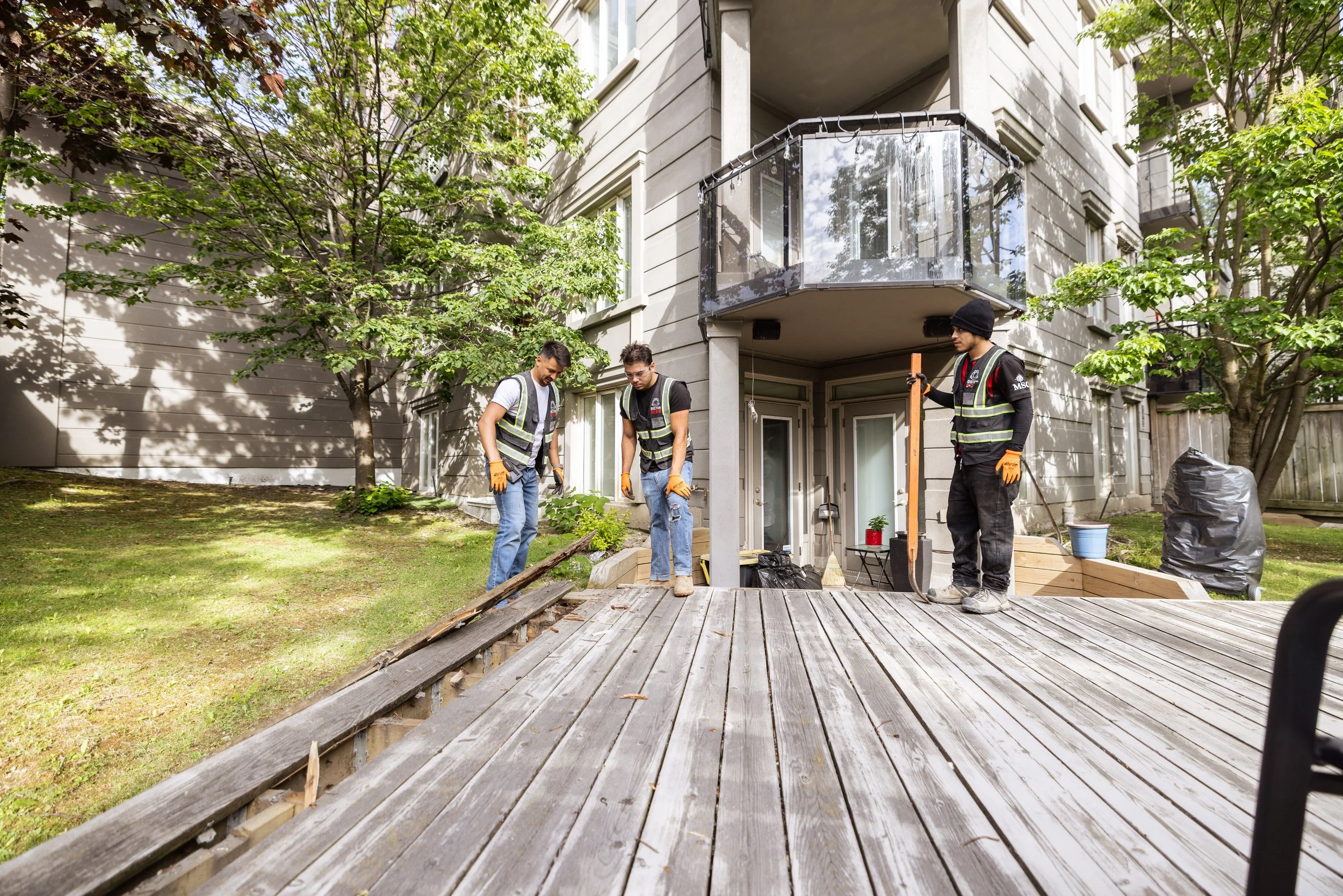
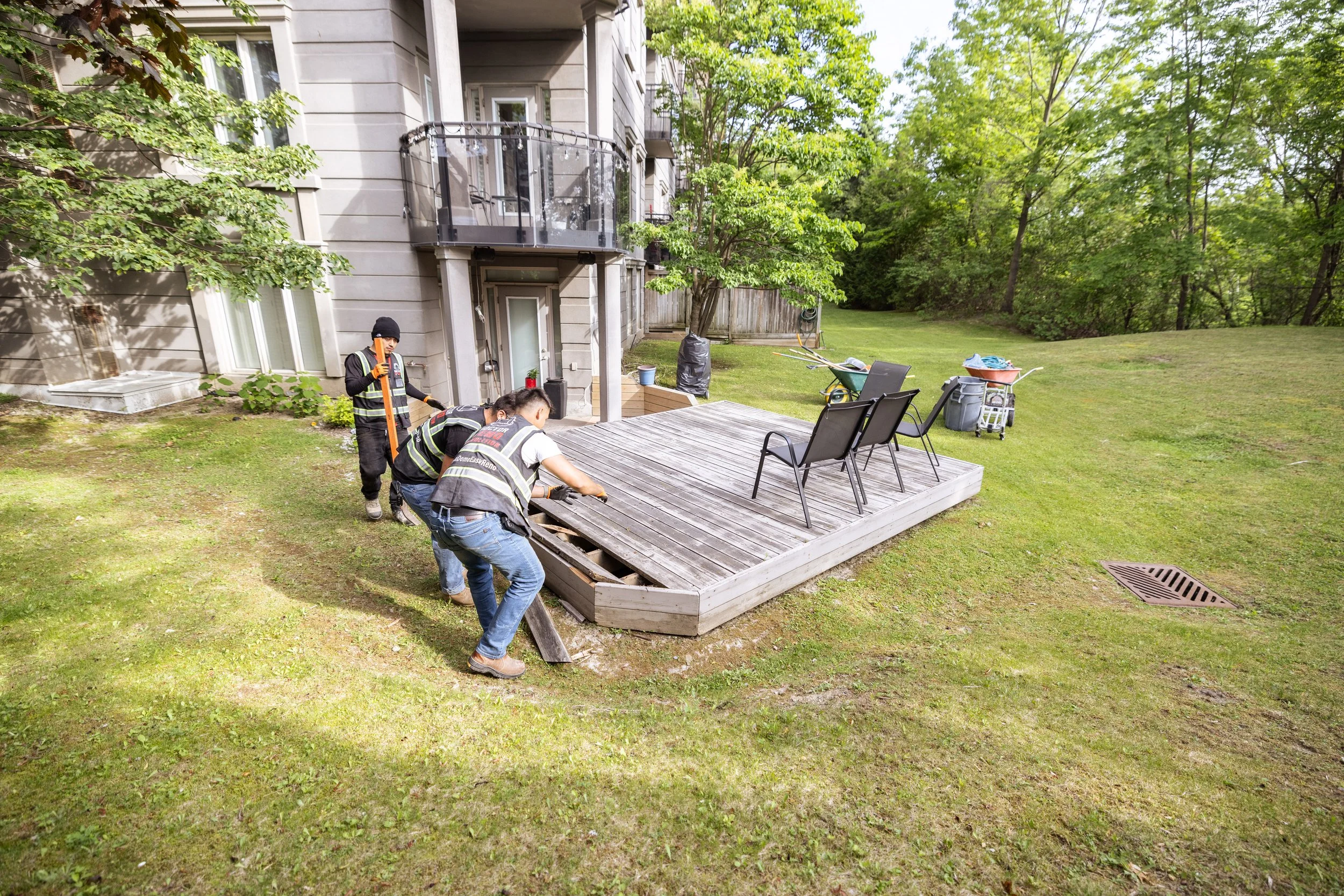
The single riskiest part of any deck demolition is the connection point where the deck meets the house. A ledger board that is improperly removed can pull siding, flashing, or even sheathing away from the structure, which turns a straightforward exterior demo into an unplanned repair bill for the homeowner. On the Dalesford job, we removed the ledger board connection carefully, working from the outside in, so the house structure and its weatherproofing stayed fully intact once the deck was gone.
Taking the Structure Apart
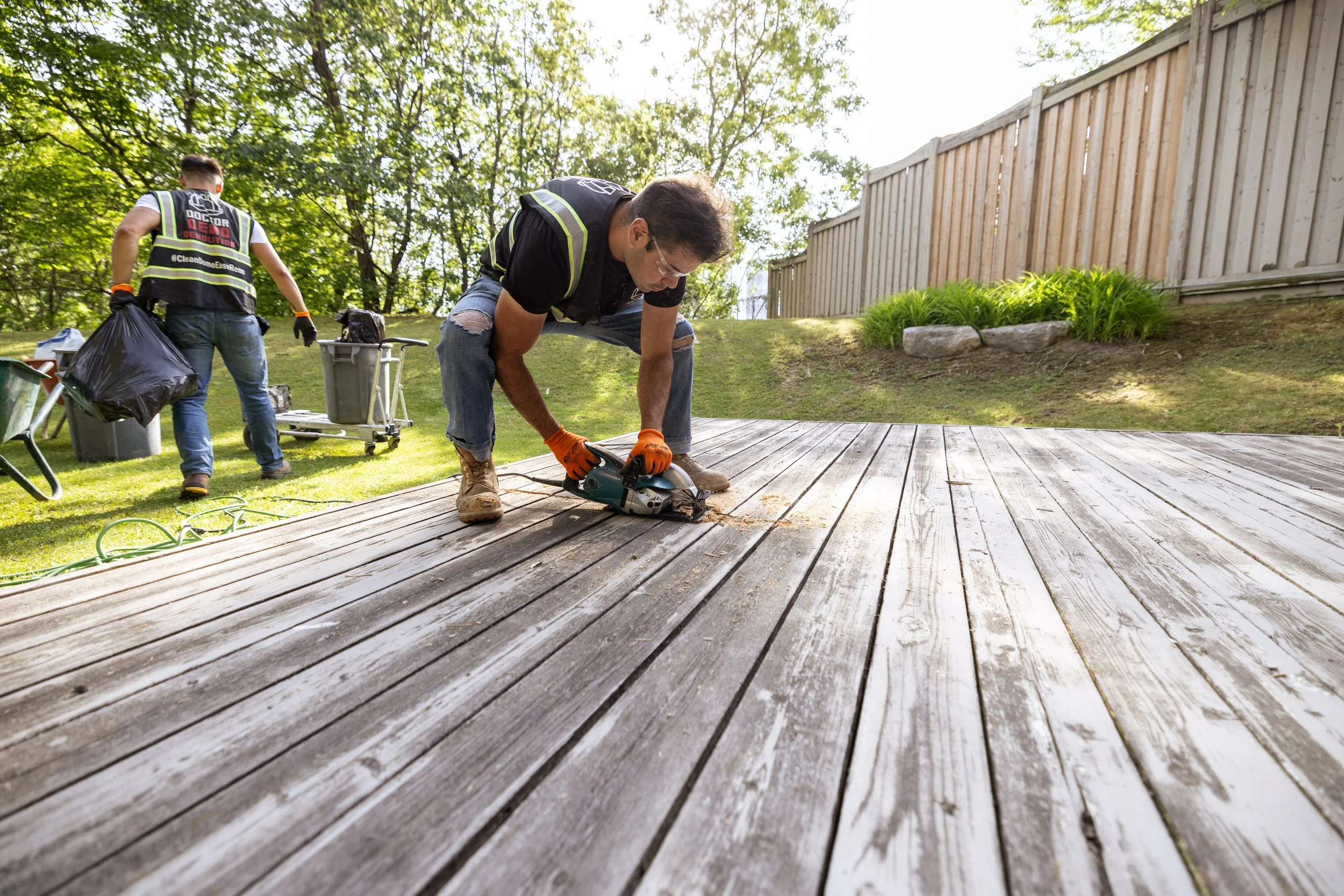
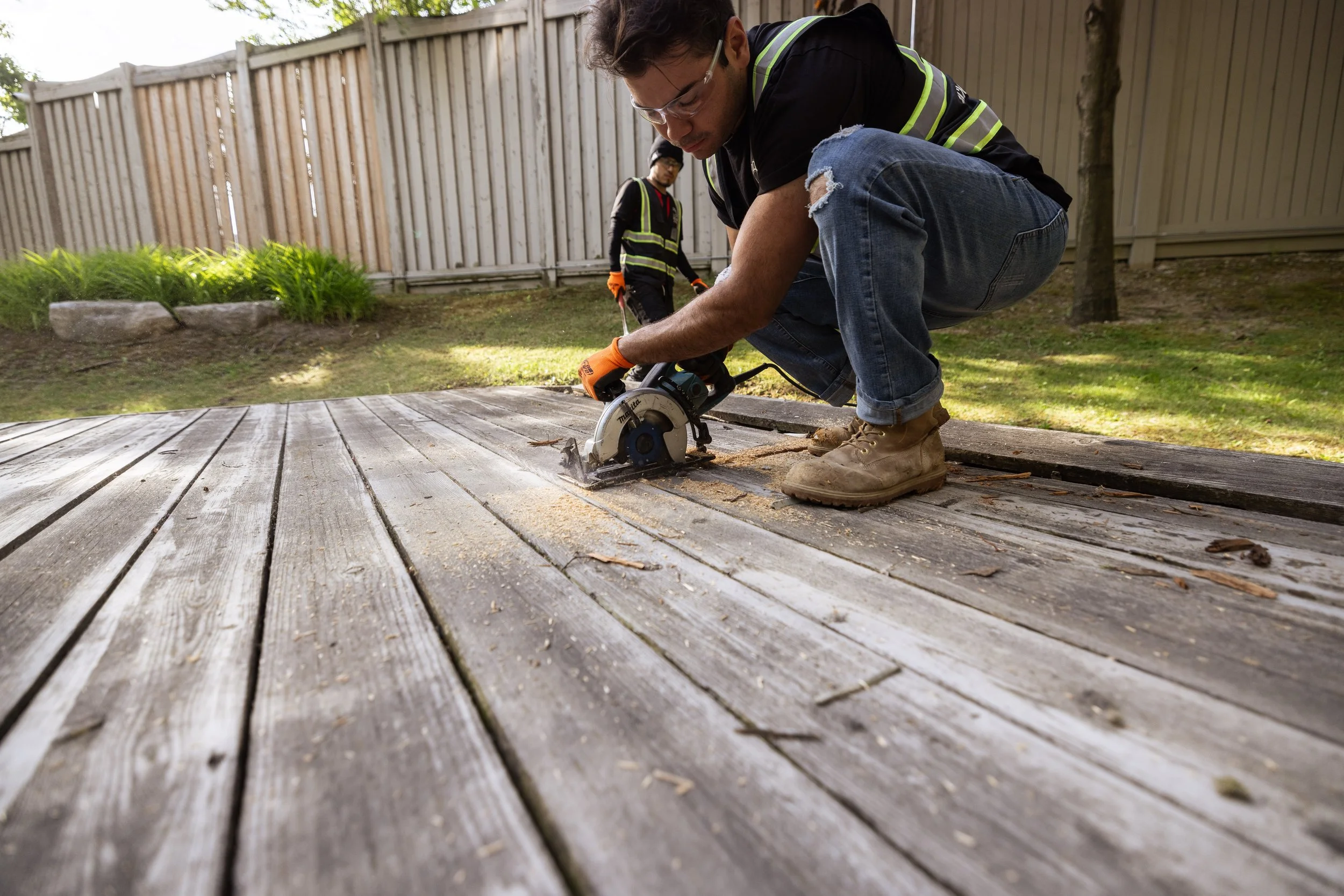
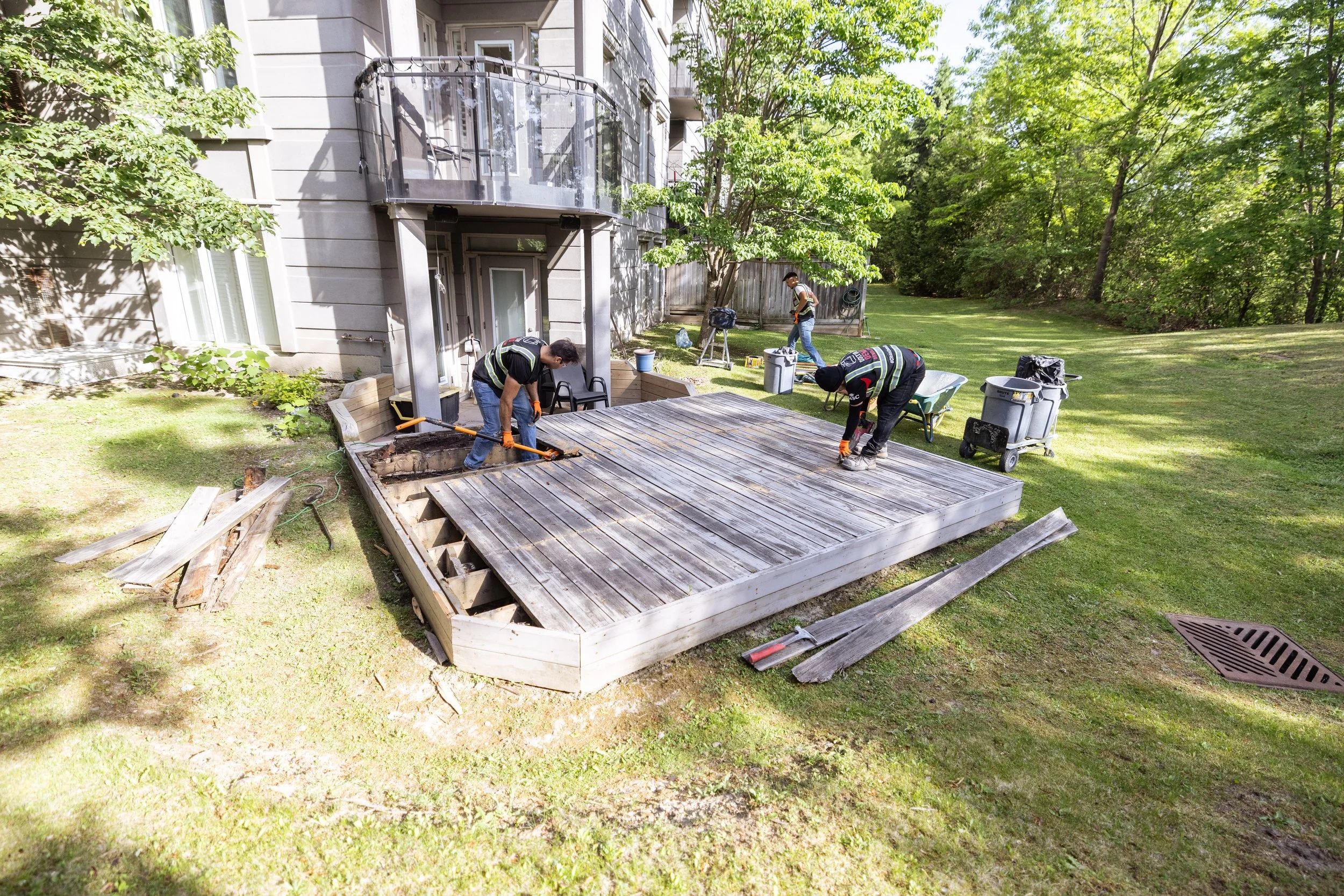
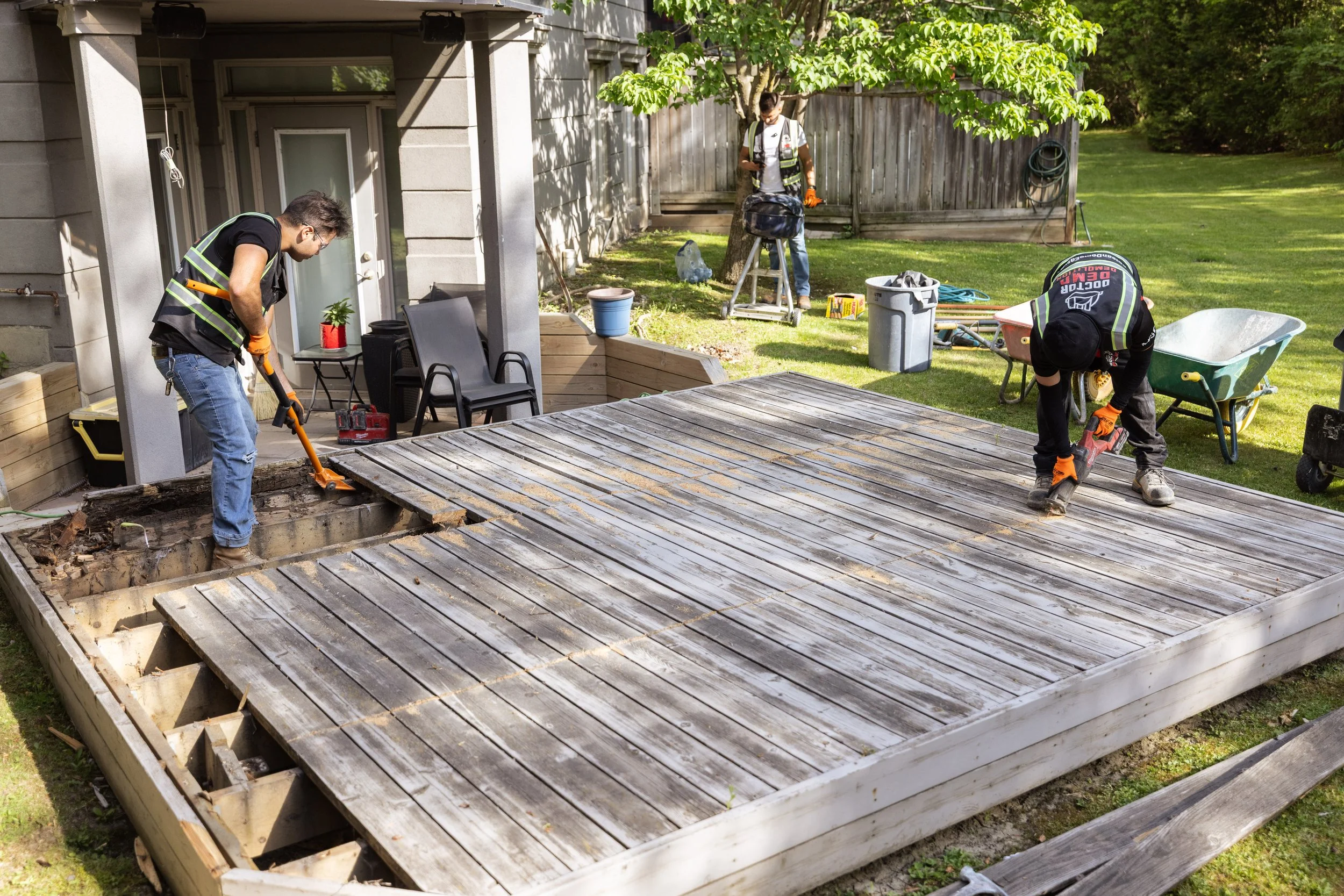
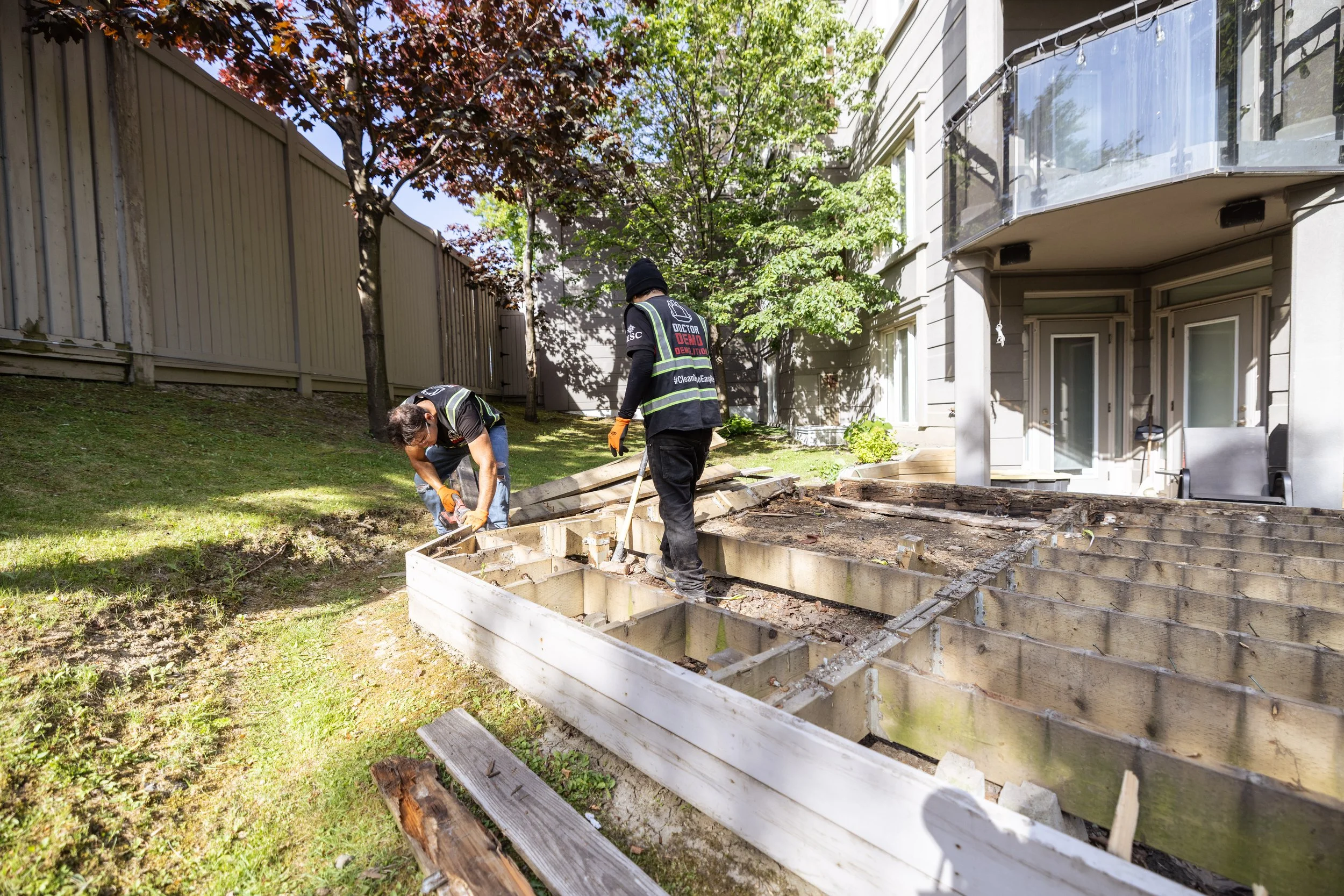
Once the deck was safely disconnected from the house, our crew worked through the structure systematically: decking boards first, then railings, then joists, then posts, and finally the footings where applicable. Working in this order keeps the site safe for the crew and makes disposal easier, since materials come apart in a way that is simple to sort and load rather than a tangled pile of broken lumber.
Sorting and Disposing of Old Deck Material Responsibly
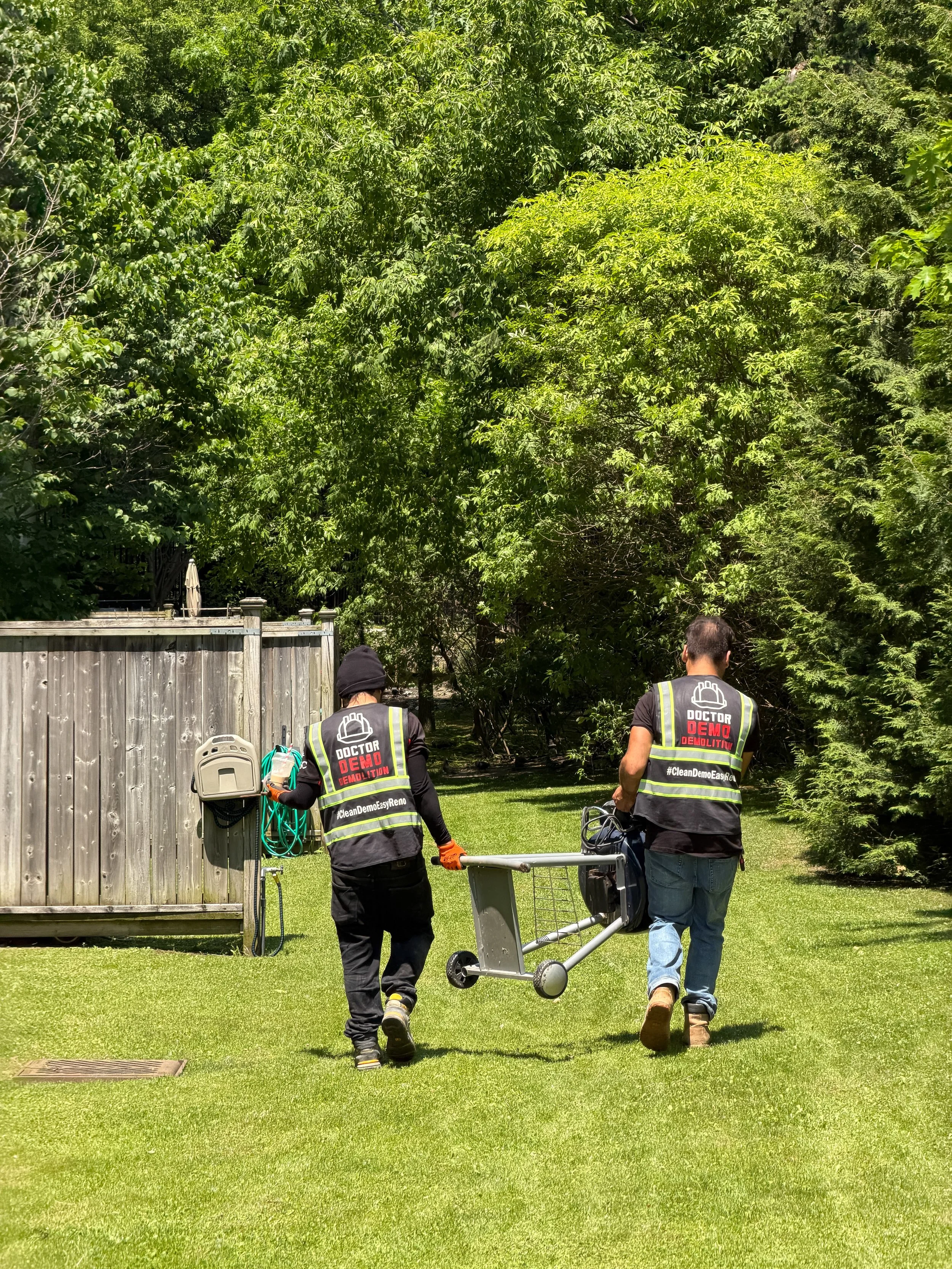
Older decks, especially ones built more than a decade or two ago, often include pressure treated lumber that requires specific disposal handling rather than simply being tossed in with general construction debris. We sort materials on site and route anything that needs special handling accordingly, which keeps the job compliant and keeps the property owner from any surprises about how their old deck was disposed of.
Leaving the Yard Ready for What Comes Next
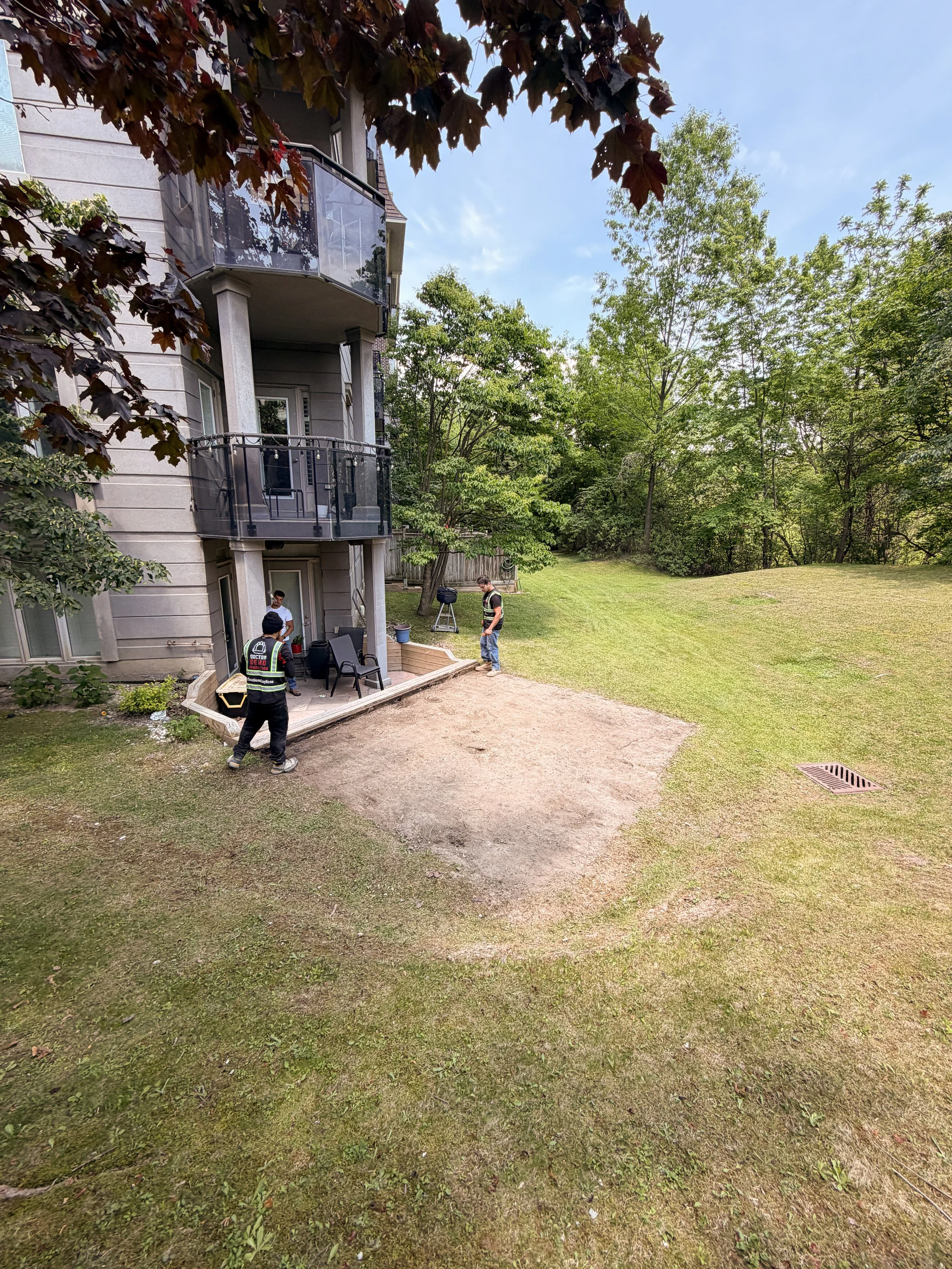
A deck demolition is rarely the final step. It is almost always the first step before a new deck, a patio, landscaping, or an addition. On the Dalesford job, that meant leaving the yard clear of debris, footings addressed as agreed with the homeowner, and the site graded and ready for the next trade to start without having to clean up after us first. A demolition crew that leaves a backyard half finished is creating extra cost and delay for whoever comes next, and we do not consider a job done until the site is actually ready for that next phase.
What to Ask Before Hiring Someone to Tear Down Your Deck
If you are planning a deck rebuild anywhere in Etobicoke or the GTA, ask your demolition contractor how they handle utility locates, how they plan to separate the deck from the house without damaging it, and what happens to the old material once it comes down. A contractor who has clear answers to all three is one who has done this enough times to know where the real risk is.
Book an Exterior Demolition Estimate
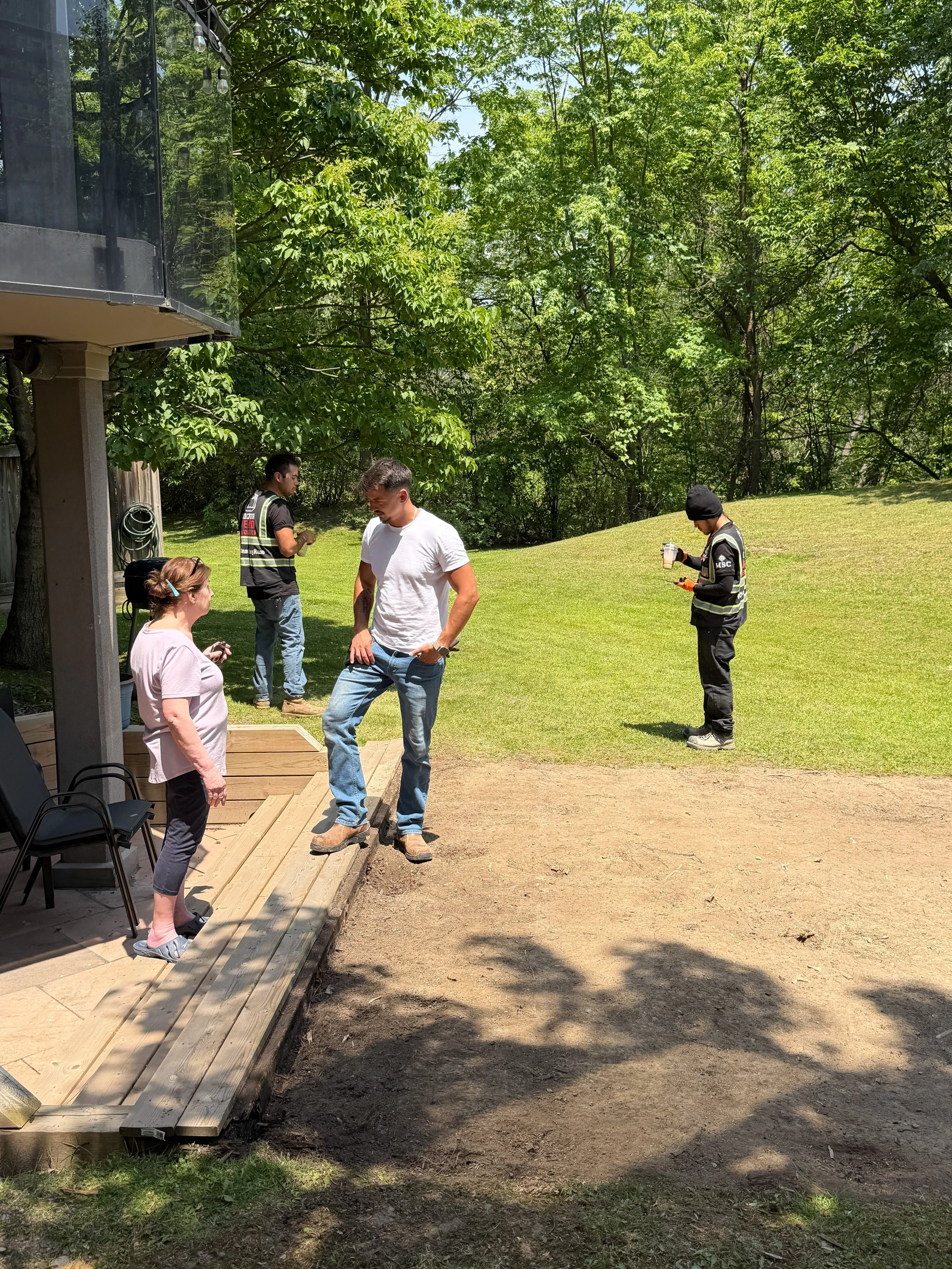
If you are planning a deck teardown, fence removal, or any exterior demolition project in Etobicoke, Toronto, or the wider GTA, Doctor Demo Inc. is ready to walk the site with you before anything comes down.
Call (647) 864 8170 or visit doctordemo.ca to request your free estimate.